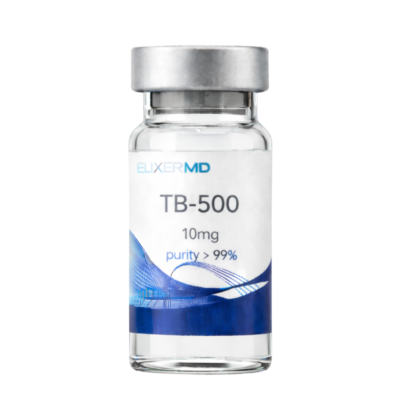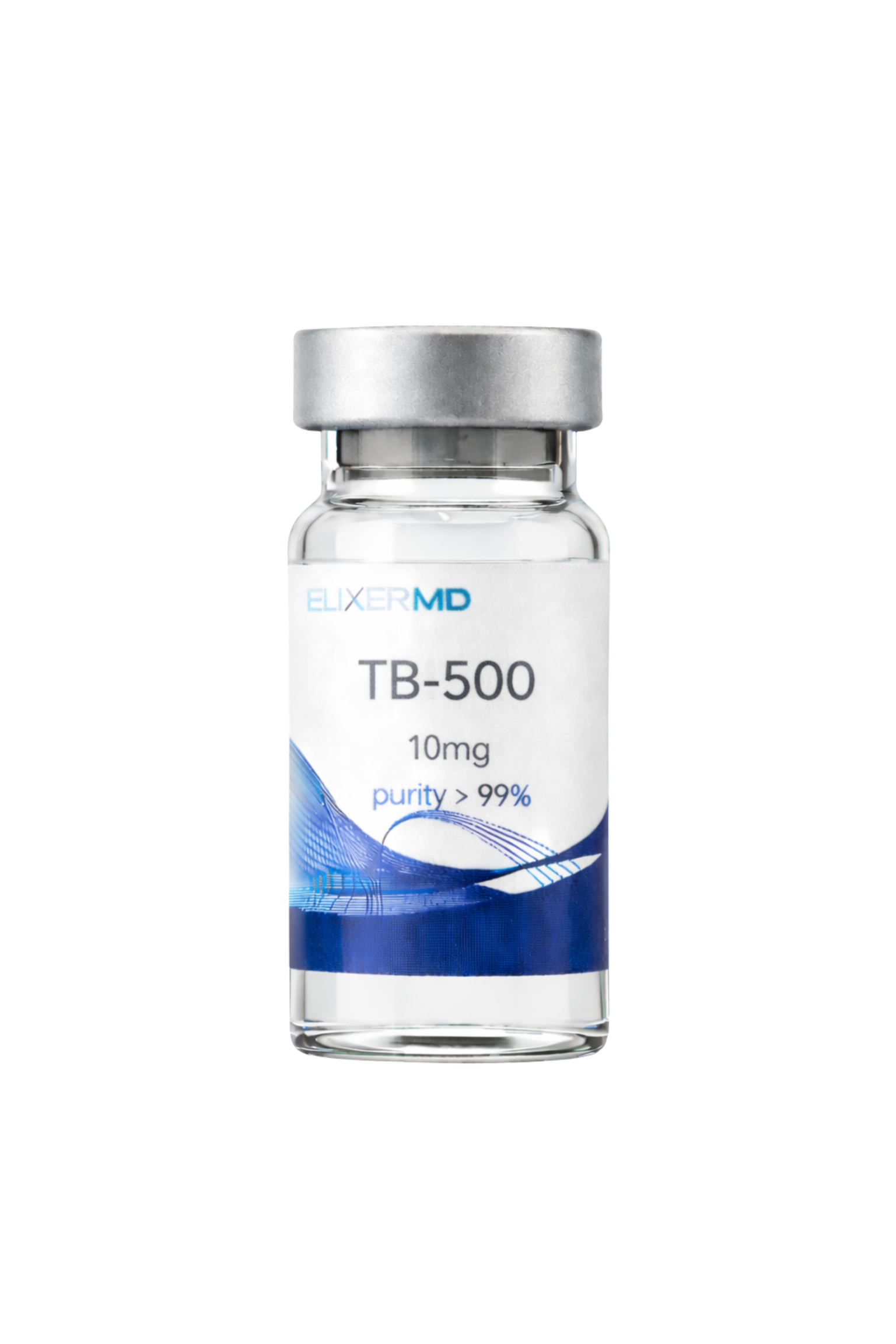
TB-500 (10mg) Research Peptide
$80.00
TB-500 is a synthetic peptide fragment modeled after thymosin beta-4, a naturally occurring protein involved in cellular migration and tissue remodeling. It is widely utilized in research studying actin regulation, angiogenesis, and tissue regeneration processes. TB-500’s molecular design provides stability and consistency for in-vitro exploration of cellular growth and repair mechanisms.
In stock
Additional info
Introduction
TB-500 is a synthetic analog of thymosin beta-4 (Tβ4), a 43–amino acid peptide present in nearly all human and animal cells. The TB-500 sequence was designed to replicate the most bioactive region of Tβ4, responsible for its ability to bind to G-actin and modulate cytoskeletal structure. This mechanism makes TB-500 an important research compound in studies involving cell migration, differentiation, and wound healing. Researchers frequently utilize TB-500 in studies focused on angiogenesis, tissue regeneration, and the reduction of cellular inflammation in in-vitro environments. Its role in promoting endothelial cell migration and capillary formation has made it a peptide of interest in regenerative medicine research.
Stability and Bioavailability
TB-500 exhibits a high level of stability and solubility, allowing for predictable performance in laboratory assays. Its synthetic structure enables strong resistance to enzymatic degradation, which supports extended activity during cellular incubation studies. The peptide’s stability allows for precise replication in long-term research models investigating wound repair, cytoskeletal dynamics, and peptide–actin interactions.
Research Applications
Cytoskeletal Dynamics and Actin Modulation
TB-500’s affinity for G-actin enhances actin polymerization and cytoskeletal organization. This mechanism underpins its use in cell motility and structural research, including studies on endothelial and epithelial regeneration.
Wound Healing and Angiogenesis
Through the upregulation of vascular endothelial growth factor (VEGF) and promotion of endothelial migration, TB-500 is studied for its role in angiogenic processes. In vitro, it demonstrates activity related to capillary tube formation and fibroblast mobilization.
Inflammation and Tissue Regeneration
Laboratory findings indicate that TB-500 may influence cytokine expression and oxidative stress responses in cell cultures. This has led to extensive use in in-vitro research on anti-inflammatory and regenerative mechanisms within connective tissue and muscle environments.
Summary
TB-500 is a stable and reproducible peptide analog derived from thymosin beta-4, providing researchers with a reliable model compound for studying tissue repair, angiogenesis, and cellular regeneration. Its actin-binding properties and role in cytoskeletal modulation continue to make it a cornerstone peptide in regenerative and cellular biology research.
References
-
Crockford D et al., Thymosin beta4: structure, function, and biological properties supporting current and future clinical applications, Annals of the New York Academy of Sciences (2010). PubMed
-
Sosne G et al., Thymosin beta 4 promotes corneal wound healing and decreases inflammation in vivo following alkali injury, Experimental Eye Research (2002). PubMed
-
Goldstein AL et al., Thymosin beta4: actin-sequestering protein moonlights to repair injured tissues, Trends in Molecular Medicine (2005). PubMed
ALL ARTICLES AND PRODUCT INFORMATION PROVIDED ON THIS WEBSITE ARE FOR INFORMATIONAL AND EDUCATIONAL PURPOSES ONLY.
The products offered on this website are furnished for in-vitro studies only. In-vitro studies (Latin: in glass) are performed outside of the body. These products are not medicines or drugs and have not been approved by the FDA to prevent, treat, or cure any medical condition, ailment, or disease. Bodily introduction of any kind into humans or animals is strictly forbidden by law.
Storage Instructions
All peptides are manufactured using lyophilization (freeze-drying), a process that protects product integrity during shipping and storage. This ensures that peptides remain stable for 3–4 months while in their lyophilized form.
Once reconstituted (mixed with bacteriostatic water), peptides should be stored in the refrigerator and will remain stable for up to 30 days.
Lyophilized peptides (unmixed powder) can be kept at room temperature for short-term storage but should ideally be refrigerated under 4°C (39°F) to maintain stability. For long-term preservation (several months to years), peptides should be stored in a freezer at -20°C to -80°C (-4°F to -112°F).
Proper storage helps maintain purity and quality, ensuring your peptides are reliable for research use.
More Peptides:
-
$50.00
 Select options This product has multiple variants. The options may be chosen on the product page
 -
$15.00
-
$220.00