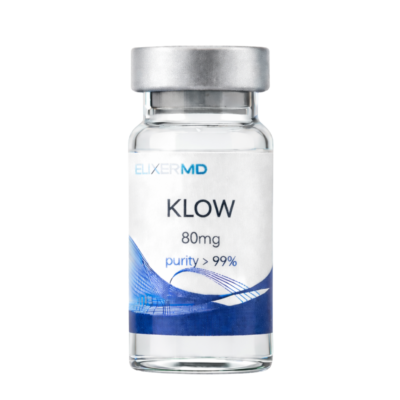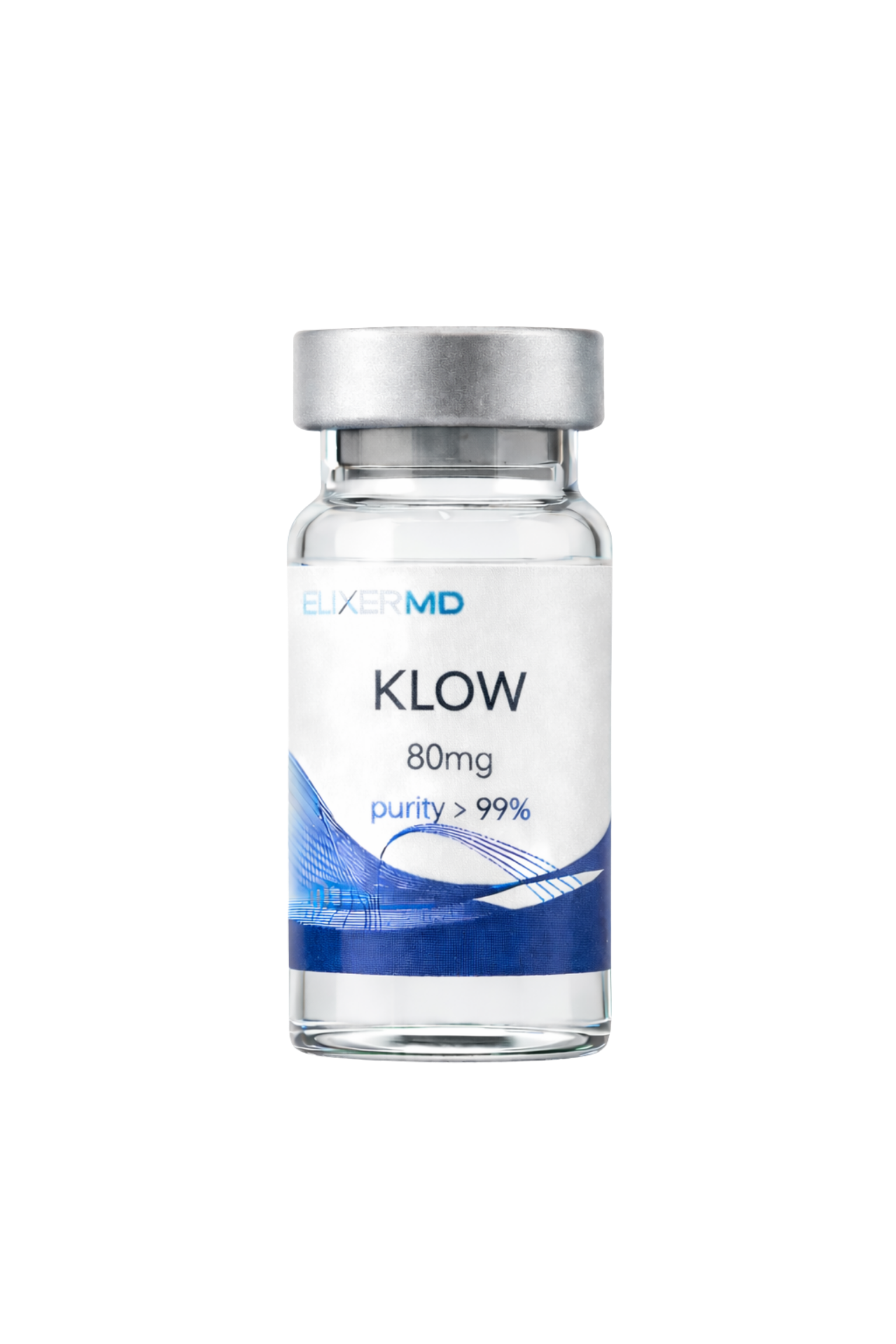
KLOW (80mg) Research Peptide
$110.00
KLOW is a unique research peptide formulation combining four well-characterized compounds: GHK-Cu, KPV, BPC-157, and Thymosin Beta-4. Each peptide contributes complementary properties related to cellular signaling, repair, and regeneration pathways. This synergistic blend is designed for advanced in-vitro studies investigating wound healing, inflammation modulation, and tissue remodeling mechanisms.
In stock
Additional info
Introduction
KLOW is a proprietary research blend composed of GHK-Cu (copper tripeptide), KPV (α-melanocyte stimulating hormone fragment), BPC-157 (Body Protection Compound), and Thymosin Beta-4 (TB-4). Each of these peptides has been independently studied for its biological activity in cell growth, angiogenesis, and inflammation control. Together, this formulation allows researchers to examine complex cellular repair and communication pathways that involve extracellular matrix remodeling, epithelial cell migration, and modulation of pro-inflammatory cytokines.
Stability and Bioavailability
Each peptide in the KLOW blend exhibits strong stability under laboratory conditions:
-
GHK-Cu forms a stable copper complex enhancing peptide integrity and oxidative protection.
-
KPV is a short tripeptide with excellent solubility and resistance to enzymatic degradation.
-
BPC-157 demonstrates high molecular stability across a broad pH range and temperature conditions.
-
Thymosin Beta-4 maintains bioactivity in protein expression models due to its structural resilience.
When combined, the KLOW formulation provides multi-peptide durability suitable for extended in-vitro observation of cell migration and recovery phenomena.
Research Applications
Cellular Regeneration and Tissue Repair
The combined action of GHK-Cu and TB-4 supports fibroblast proliferation, collagen synthesis, and angiogenesis. This interaction has been used in research focused on cellular repair and remodeling in dermal and epithelial models.
Inflammation Modulation and Immune Balance
KPV contributes to the anti-inflammatory component of KLOW, influencing cytokine regulation and melanocortin receptor activity. In conjunction with BPC-157, the blend is studied for its ability to stabilize tissue microenvironments during oxidative stress.
Angiogenesis and Extracellular Matrix Support
BPC-157 and TB-4 are known to affect growth factor expression (such as VEGF and FGF). In combination with the copper-binding activity of GHK-Cu, this results in enhanced modeling of angiogenic responses and ECM organization in experimental systems.
Synergistic Pathway Exploration
The multi-component composition of KLOW enables exploration of synergistic cellular responses, including interactions between peptide-induced signaling cascades such as TGF-β, Akt, and MAPK pathways, all relevant to repair biology and regenerative medicine models.
Summary
KLOW represents a comprehensive, multi-pathway peptide formulation for advanced research into cellular regeneration and inflammation modulation. By integrating GHK-Cu, KPV, BPC-157, and Thymosin Beta-4, it provides a unique tool for scientists studying wound healing, angiogenesis, and molecular recovery mechanisms in vitro.
References
-
Pickart L, The human tri-peptide GHK and tissue remodeling, Journal of Biomaterials Science (2008). PubMed
-
Wang W et al., Melanocortin Regulation of Inflammation, Front Endocrinology (2019). PubMed
-
Seiwerth S et al., Stable Gastric Pentadecapeptide BPC 157 and Wound Healing, Front Pharmacol. (2021). PubMed
-
Goldstein AL et al., Thymosin beta4: actin-sequestering protein moonlights to repair injured tissues, Trends Mol Med. (2005). PubMed
-
Flagler MJ et al., Combinations of peptides synergistically activate the regenerative capacity of skin cells in vitro, Int J Cosmet Sci. (2021). PubMed
ALL ARTICLES AND PRODUCT INFORMATION PROVIDED ON THIS WEBSITE ARE FOR INFORMATIONAL AND EDUCATIONAL PURPOSES ONLY.
The products offered on this website are furnished for in-vitro studies only. In-vitro studies (Latin: in glass) are performed outside of the body. These products are not medicines or drugs and have not been approved by the FDA to prevent, treat, or cure any medical condition, ailment, or disease. Bodily introduction of any kind into humans or animals is strictly forbidden by law.
Storage Instructions
All peptides are manufactured using lyophilization (freeze-drying), a process that protects product integrity during shipping and storage. This ensures that peptides remain stable for 3–4 months while in their lyophilized form.
Once reconstituted (mixed with bacteriostatic water), peptides should be stored in the refrigerator and will remain stable for up to 30 days.
Lyophilized peptides (unmixed powder) can be kept at room temperature for short-term storage but should ideally be refrigerated under 4°C (39°F) to maintain stability. For long-term preservation (several months to years), peptides should be stored in a freezer at -20°C to -80°C (-4°F to -112°F).
Proper storage helps maintain purity and quality, ensuring your peptides are reliable for research use.
More Peptides:
-
$50.00
 Select options This product has multiple variants. The options may be chosen on the product page
 -
$15.00
-
$220.00