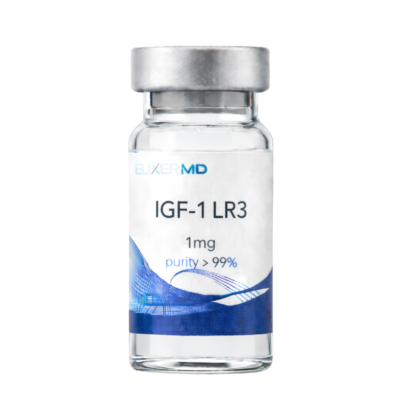
IGF-1 LR3 (1mg)
$70.00
IGF-1 LR3 (Insulin-like Growth Factor-1 Long Arg3) is a synthetic analog of human IGF-1 engineered for enhanced stability and bioavailability in research applications. It binds with high affinity to the IGF-1 receptor, playing a critical role in studies involving cellular growth, repair, and anabolic signaling. IGF-1 LR3 offers extended receptor activation compared to native IGF-1, making it valuable in molecular and tissue-based experiments.
In stock
Additional info
Introduction
IGF-1 LR3 is a recombinant peptide analog derived from human insulin-like growth factor-1 (IGF-1) with a 13–amino acid extension at the N-terminus and a substitution of arginine at position 3. These modifications inhibit binding to IGF-binding proteins (IGFBPs), significantly increasing the peptide’s half-life and receptor activity. In laboratory settings, IGF-1 LR3 is studied for its involvement in cellular proliferation, differentiation, and survival—key pathways in metabolic, endocrine, and regenerative research.
Stability and Bioavailability
Compared to native IGF-1, IGF-1 LR3 demonstrates enhanced stability in cell culture and serum environments. Its structural modification reduces IGFBP interference, resulting in prolonged receptor engagement and increased biological potency. This allows researchers to study long-term IGF-1 receptor–mediated processes with consistent molecular activity and reproducible outcomes.
Research Applications
Cellular Growth and Differentiation
IGF-1 LR3 stimulates cell proliferation and differentiation across a variety of tissue types, including muscle, bone, and neural cells. It is used in studies evaluating anabolic signaling, protein synthesis, and stem cell development.
Metabolic and Endocrine Function
By mimicking endogenous IGF-1 signaling, IGF-1 LR3 aids in exploring the metabolic effects of insulin-like peptides, including glucose utilization, lipid metabolism, and endocrine regulation. It also serves as a reference peptide in insulin sensitivity assays and growth factor cross-talk studies.
Tissue Repair and Regeneration
Due to its role in activating the PI3K/Akt pathway, IGF-1 LR3 has been investigated for its capacity to promote cellular repair and reduce apoptosis in in-vitro models of tissue injury. Researchers use it to study growth factor–driven wound healing and tissue regeneration mechanisms.
Summary
IGF-1 LR3 is a potent and stable analog of insulin-like growth factor-1 that extends receptor signaling duration and minimizes IGFBP inhibition. It continues to serve as a cornerstone compound for understanding growth factor biology, anabolic metabolism, and cellular regeneration.
References
-
Clemmons DR, Metabolic actions of IGF-I in normal physiology and diabetes, Endocrinology and Metabolism Clinics of North America (2012). PubMed
-
Schedlich LJ et al., TGF-β-induced expression of IGFBP-3 regulates IGF1R signaling in human osteosarcoma cells, Molecular and Cellular Endocrinology (2013). PubMed
-
Xu J et al., Biological effects of IGF-1 and its analogs on cell growth and apoptosis, Molecular and Cellular Endocrinology (2004). https://doi.org/10.1016/j.mce.2004.02.018
-
Le Roith D et al., Insulin-like growth factors in pediatric health and disease, The Journal of Clinical Endocrinology and Metabolism (1999). PubMed
ALL ARTICLES AND PRODUCT INFORMATION PROVIDED ON THIS WEBSITE ARE FOR INFORMATIONAL AND EDUCATIONAL PURPOSES ONLY.
The products offered on this website are furnished for in-vitro studies only. In-vitro studies (Latin: in glass) are performed outside of the body. These products are not medicines or drugs and have not been approved by the FDA to prevent, treat, or cure any medical condition, ailment, or disease. Bodily introduction of any kind into humans or animals is strictly forbidden by law.
Storage Instructions
All peptides are manufactured using lyophilization (freeze-drying), a process that protects product integrity during shipping and storage. This ensures that peptides remain stable for 3–4 months while in their lyophilized form.
Once reconstituted (mixed with bacteriostatic water), peptides should be stored in the refrigerator and will remain stable for up to 30 days.
Lyophilized peptides (unmixed powder) can be kept at room temperature for short-term storage but should ideally be refrigerated under 4°C (39°F) to maintain stability. For long-term preservation (several months to years), peptides should be stored in a freezer at -20°C to -80°C (-4°F to -112°F).
Proper storage helps maintain purity and quality, ensuring your peptides are reliable for research use.
More Peptides:
-
$50.00
 Select options This product has multiple variants. The options may be chosen on the product page
 -
$15.00
-
$220.00