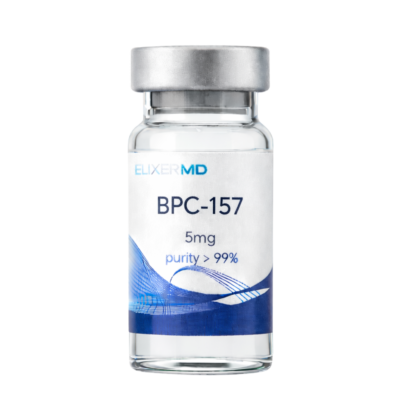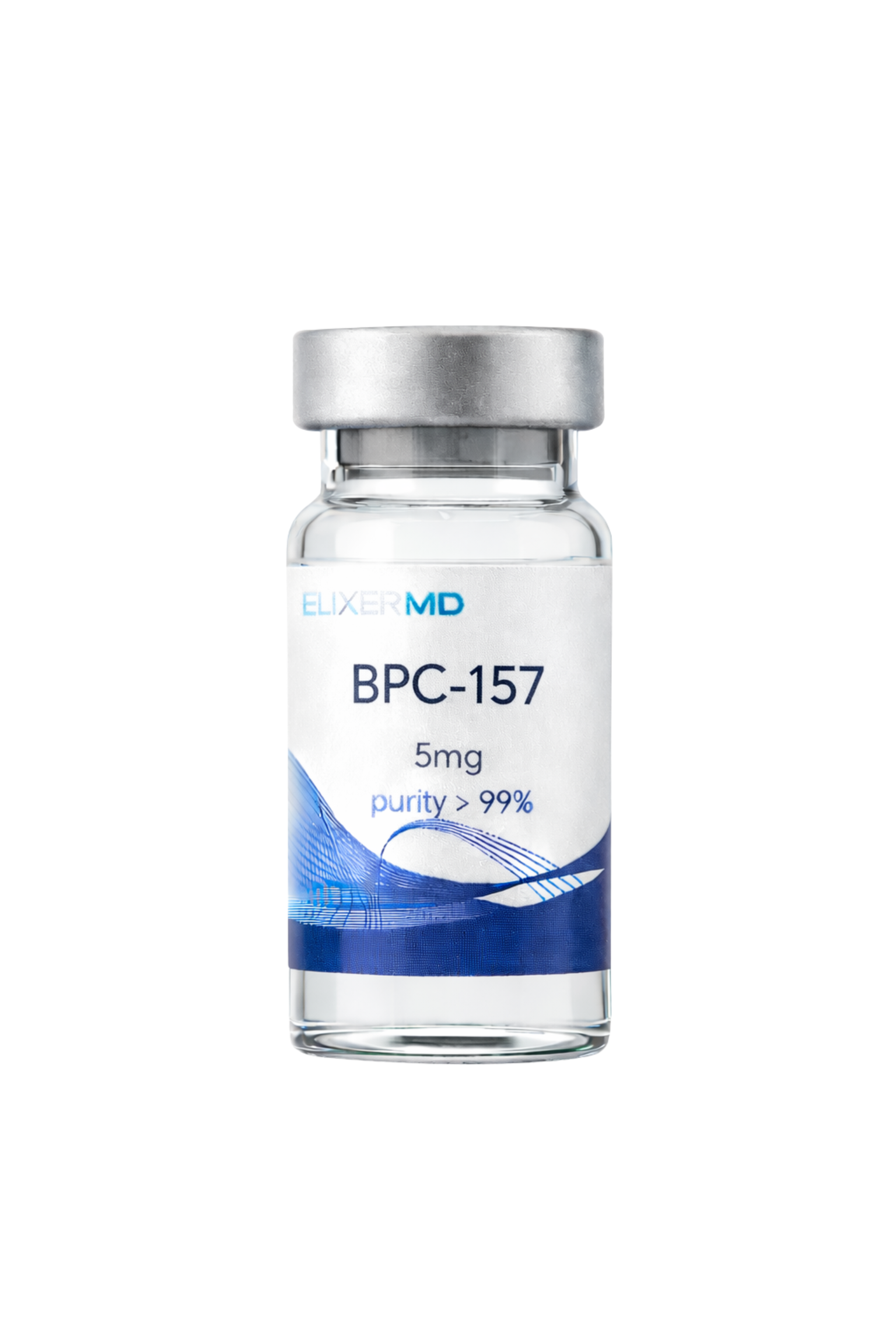
BPC-157 (5mg) Research Peptide
$50.00
BPC-157 (Body Protection Compound-157) is a synthetic peptide fragment derived from a naturally occurring protein in gastric juice. Research in animal models has suggested its potential role in tissue protection, angiogenesis, and gastrointestinal studies. Its unique stability and bioavailability have made it a widely researched peptide in preclinical settings. BPC-157 continues to be studied across multiple systems, including musculoskeletal, vascular, and neurological models.
In stock
Additional info
Introduction
BPC-157 (Body Protection Compound-157) is a synthetic pentadecapeptide first identified in the 1990s, originating from a protein found in gastric juice. It has gained widespread attention in preclinical studies for its stability in gastric conditions and potential biological activity across multiple organ systems. Laboratory research has explored its roles in musculoskeletal, gastrointestinal, neurological, and cardiovascular contexts.
Stability and Bioavailability
Unlike many peptides that degrade rapidly in the gastrointestinal tract, BPC-157 has been observed to exhibit stability in gastric conditions. This property has allowed it to be tested in a wide range of experimental models, including oral administration in animals. Its resilience and compatibility with multiple research pathways make it a prominent subject in peptide science.
Research Applications
Sleep and Circadian Rhythm Regulation
Not typically associated with sleep regulation, but studies have suggested BPC-157 may influence neurological pathways that connect gut peptides with brain activity. Research continues into its possible interactions with neurotransmitter signaling.
Musculoskeletal and Tendon Studies
A large body of animal research has evaluated BPC-157 in tendon, ligament, and skeletal muscle injury models. Findings have suggested improvements in angiogenesis, tissue remodeling, and structural integrity. These studies have positioned BPC-157 as a focal peptide for musculoskeletal investigations.
Cardiovascular and Endothelial Research
Animal studies have examined the influence of BPC-157 on endothelial function and vascular healing. Findings indicate possible interactions with nitric oxide pathways, suggesting a role in vascular stability and blood vessel remodeling.
Gastrointestinal Studies
Since BPC-157 originates from gastric proteins, it has been widely tested in gastrointestinal models. Research has investigated its potential effects on ulcer healing, bowel inflammation, and vascular repair in digestive tissue.
Neurological Research
Research models have highlighted BPC-157’s potential activity in protecting neural tissue under conditions such as traumatic brain injury, stroke, and oxidative stress. Observations have centered on its possible neuroprotective and anti-inflammatory effects in experimental systems.
Summary
BPC-157 is a synthetic derivative of a naturally occurring peptide isolated from the human GI tract. It has high bioavailability when administered orally or subcutaneously. It is resistant to stomach acid and, as such, can be administered in water or in food. Research in animal models, primarily rats, has shown benefits in heart disease, tendon injury, ligament injury, eye disease, the central nervous system, and inflammatory bowel disease. BPC-157 is helping to further our understanding of the workings of multiple organ systems and has opened up new research avenues into both the treatment and prevention of disease.
References
-
Gwyer D, et al. Gastric pentadecapeptide body protection compound BPC 157 and its role in accelerating musculoskeletal soft tissue healing. Cell Tissue Res. (2019). PubMed
-
Cerovecki T, et al. Pentadecapeptide BPC 157 improves ligament healing in the rat. J Orthop Res. (2010). PubMed
-
Chang CH, et al. Pentadecapeptide BPC 157 enhances growth hormone receptor expression in tendon fibroblasts. Molecules (2014). PubMed
-
Staresinic M, et al. Stable gastric pentadecapeptide BPC 157 and striated, smooth, and heart muscle. Biomedicines. (2022). PubMed
ALL ARTICLES AND PRODUCT INFORMATION PROVIDED ON THIS WEBSITE ARE FOR INFORMATIONAL AND EDUCATIONAL PURPOSES ONLY.
The products offered on this website are furnished for in-vitro studies only. In-vitro studies (Latin: in glass) are performed outside of the body. These products are not medicines or drugs and have not been approved by the FDA to prevent, treat, or cure any medical condition, ailment, or disease. Bodily introduction of any kind into humans or animals is strictly forbidden by law.
Storage Instructions
All peptides are manufactured using lyophilization (freeze-drying), a process that protects product integrity during shipping and storage. This ensures that peptides remain stable for 3–4 months while in their lyophilized form.
Once reconstituted (mixed with bacteriostatic water), peptides should be stored in the refrigerator and will remain stable for up to 30 days.
Lyophilized peptides (unmixed powder) can be kept at room temperature for short-term storage but should ideally be refrigerated under 4°C (39°F) to maintain stability. For long-term preservation (several months to years), peptides should be stored in a freezer at -20°C to -80°C (-4°F to -112°F).
Proper storage helps maintain purity and quality, ensuring your peptides are reliable for research use.
More Peptides:
-
$50.00
 Select options This product has multiple variants. The options may be chosen on the product page
 -
$15.00
-
$220.00