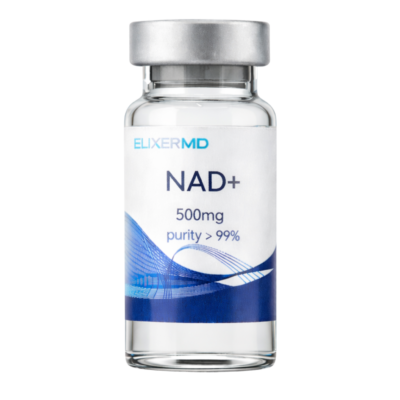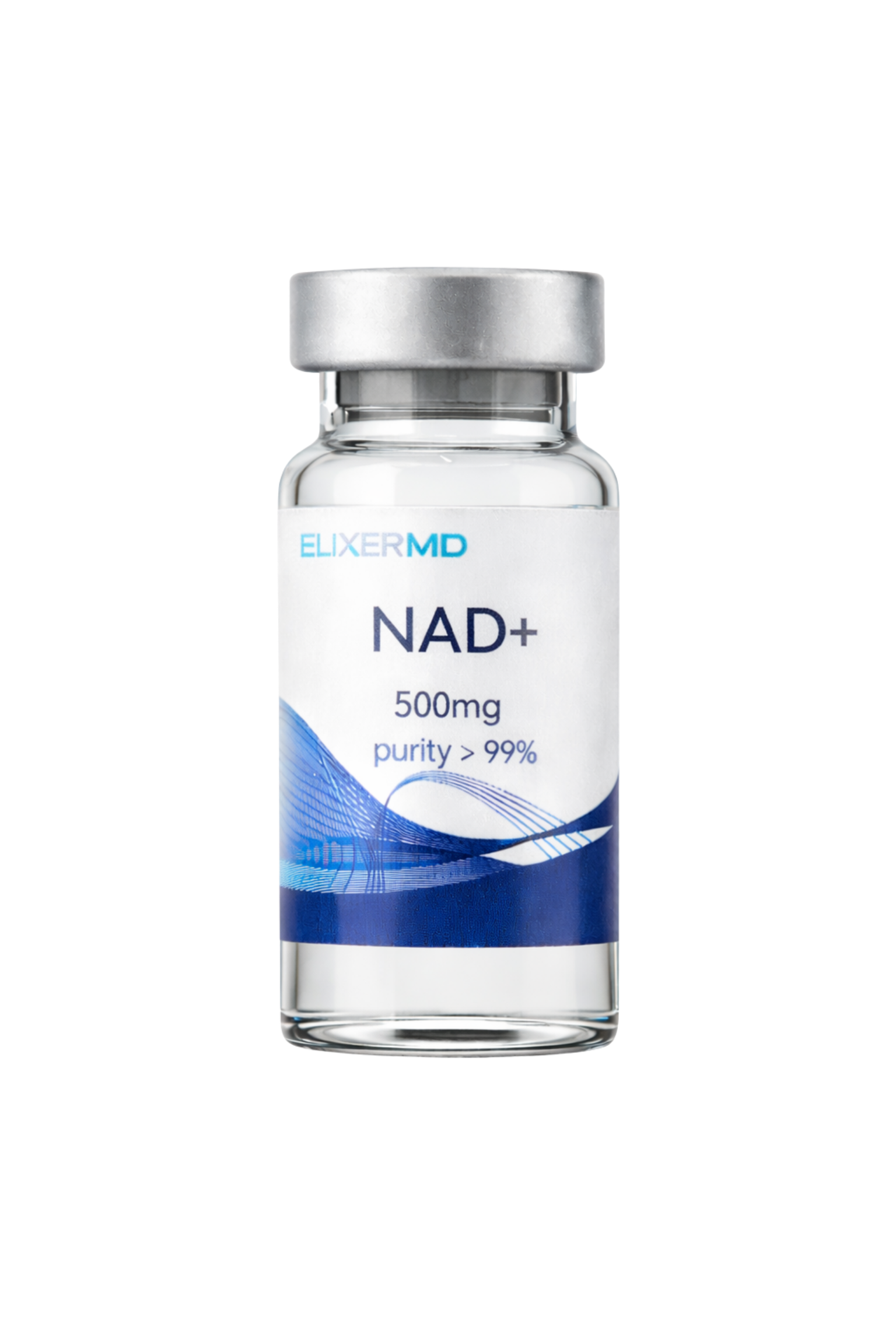
NAD+ (500mg) Research Peptide
$90.00
Nicotinamide adenine dinucleotide (NAD+) is an essential coenzyme present in all living cells, where it plays a fundamental role in redox reactions and cellular energy metabolism. It serves as a critical factor in research on mitochondrial function, aging, and DNA repair. NAD+ is widely utilized in studies investigating sirtuin activation, metabolic homeostasis, and oxidative stress.
In stock
Additional info
Introduction
Nicotinamide adenine dinucleotide (NAD+) is a coenzyme found in every cell of the body, essential for redox balance and cellular energy transfer. It functions primarily as an electron carrier in oxidative phosphorylation and glycolysis, supporting adenosine triphosphate (ATP) production. In laboratory settings, NAD+ is extensively studied for its role in aging, mitochondrial function, and DNA repair mechanisms. Researchers also examine NAD+ levels in relation to sirtuin activity and metabolic resilience, making it a cornerstone molecule in biochemistry and longevity research.
Stability and Bioavailability
In in-vitro research, NAD+ demonstrates strong chemical stability under controlled pH and temperature conditions. However, its reduced form (NADH) is more sensitive to oxidative degradation, making careful handling essential for reproducibility. The coenzyme’s amphiphilic properties allow it to function in both aqueous and lipid environments, enhancing its compatibility with a wide range of cellular models. NAD+ can be effectively regenerated using enzymatic cycling systems, making it suitable for extended metabolic studies.
Research Applications
Cellular Energy Metabolism
NAD+ participates in glycolysis, the citric acid cycle, and oxidative phosphorylation, making it indispensable in metabolic and mitochondrial studies. Its role as an electron donor and acceptor provides insight into ATP synthesis and energy efficiency in cells.
Aging and Longevity Research
Age-related declines in NAD+ levels have been linked to mitochondrial dysfunction and impaired cellular signaling. In-vitro studies use NAD+ to explore pathways involving sirtuin (SIRT1–SIRT7) activation and nicotinamide phosphoribosyltransferase (NAMPT)-mediated NAD+ biosynthesis.
DNA Repair and Oxidative Stress
NAD+ acts as a substrate for poly(ADP-ribose) polymerases (PARPs), which are essential for DNA repair and genomic stability. Research also investigates how NAD+ depletion influences oxidative damage and apoptosis, providing valuable insights into cellular defense mechanisms.
Neuroprotection and Cellular Resilience
Laboratory models exploring neurodegeneration and inflammation often employ NAD+ to study neuron survival pathways. It has shown significance in modulating oxidative stress responses and promoting mitochondrial biogenesis under experimental conditions.
Summary
NAD+ is a critical metabolic coenzyme with diverse roles in cellular energy, redox balance, and genomic integrity. Its use in in-vitro research supports a deeper understanding of mitochondrial dynamics, aging, and metabolic regulation, providing a foundation for continued exploration into cellular longevity mechanisms.
References
-
Verdin E, NAD+ in aging, metabolism, and neurodegeneration, Science (2015). PubMed
-
Ying W, NAD+/NADH and NADP+/NADPH in cellular functions and cell death, Antioxidants & Redox Signaling (2008). PubMed
-
Cantó C et al., Targeting sirtuin 1 to improve metabolism: All you need is NAD+?, Pharmacological Reviews (2012). PubMed
-
Zhang H et al., NAD+ repletion improves mitochondrial and stem cell function and enhances life span in mice, Science (2016). PubMed
-
Rajman L et al., NAD+ metabolism, a therapeutic target for age-related metabolic disease, Critical reviews in biochemistry and molecular biology (2013). PubMed
ALL ARTICLES AND PRODUCT INFORMATION PROVIDED ON THIS WEBSITE ARE FOR INFORMATIONAL AND EDUCATIONAL PURPOSES ONLY.
The products offered on this website are furnished for in-vitro studies only. In-vitro studies (Latin: in glass) are performed outside of the body. These products are not medicines or drugs and have not been approved by the FDA to prevent, treat, or cure any medical condition, ailment, or disease. Bodily introduction of any kind into humans or animals is strictly forbidden by law.
Storage Instructions
All peptides are manufactured using lyophilization (freeze-drying), a process that protects product integrity during shipping and storage. This ensures that peptides remain stable for 3–4 months while in their lyophilized form.
Once reconstituted (mixed with bacteriostatic water), peptides should be stored in the refrigerator and will remain stable for up to 30 days.
Lyophilized peptides (unmixed powder) can be kept at room temperature for short-term storage but should ideally be refrigerated under 4°C (39°F) to maintain stability. For long-term preservation (several months to years), peptides should be stored in a freezer at -20°C to -80°C (-4°F to -112°F).
Proper storage helps maintain purity and quality, ensuring your peptides are reliable for research use.
More Peptides:
-
$50.00
 Select options This product has multiple variants. The options may be chosen on the product page
 -
$15.00
-
$220.00