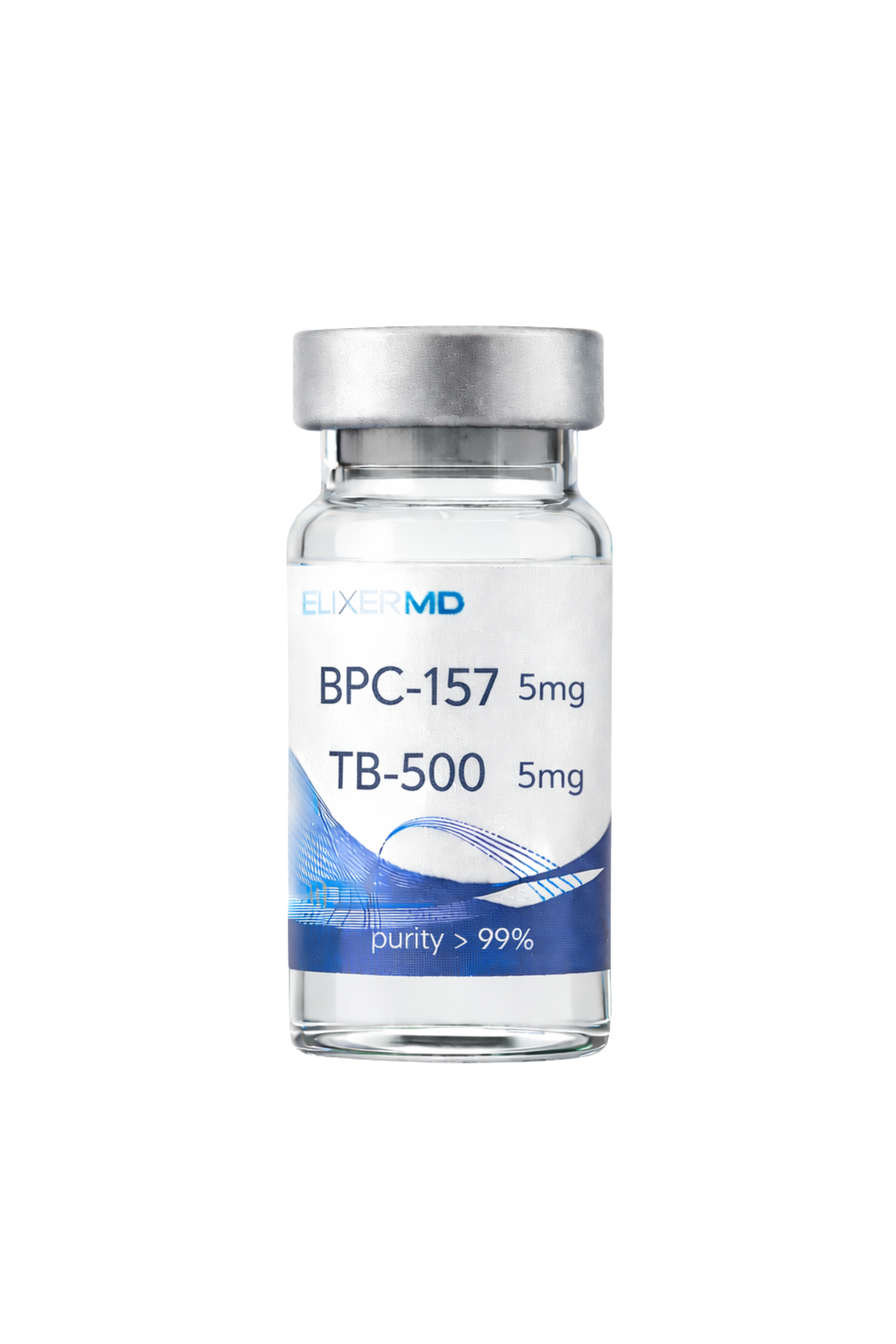
BPC 157 and TB-500 Research Peptide
$100.00
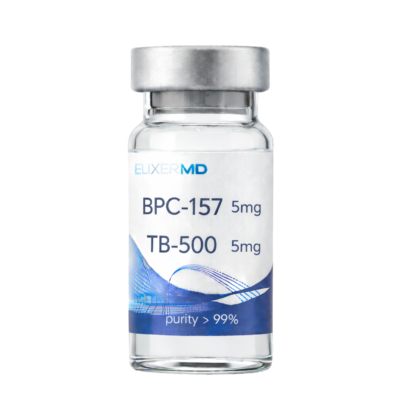
The BPC-157 and TB-500 combination is a research-driven pairing of two synthetic peptides studied for their potential in tissue repair, angiogenesis, and cellular recovery. Together, they have been explored for their synergistic effects in promoting healing and reducing inflammation in preclinical models. Each peptide targets different yet complementary biological pathways, making this combination highly relevant for regenerative research applications.
In stock
Additional info
Introduction
The BPC-157 and TB-500 peptide combination has gained recognition in research for its potential synergistic properties in tissue protection and repair. BPC-157, derived from a partial sequence of body protection compound, is known for its angiogenic and cytoprotective effects in experimental models. TB-500, a synthetic version of the naturally occurring peptide thymosin beta-4, has been studied for its ability to enhance cellular migration and differentiation. Together, these compounds are being investigated for their complementary roles in wound healing, inflammation modulation, and musculoskeletal regeneration.
Stability and Bioavailability
Both BPC-157 and TB-500 have been documented for their notable molecular stability and solubility under laboratory conditions. BPC-157’s resistance to enzymatic degradation allows it to maintain biological activity across diverse experimental environments. TB-500’s structure enables effective cellular uptake and distribution, supporting consistent outcomes in controlled studies. Their combined pharmacokinetic properties make this pairing an appealing model for studying long-term peptide interactions.
Research Applications
Tissue Repair and Regeneration
Preclinical findings indicate that the BPC-157 and TB-500 combination may accelerate cellular repair mechanisms, enhance angiogenesis, and improve collagen synthesis. Together, they appear to promote tissue resilience and regeneration in experimental injury models.
Anti-Inflammatory and Cytoprotective Effects
Both peptides have been examined for their ability to regulate inflammatory signaling. BPC-157 contributes to maintaining vascular integrity, while TB-500 supports cellular recovery from oxidative and mechanical stress. Their combined use may offer broader cytoprotective effects in laboratory studies.
Musculoskeletal and Neurological Support
Experimental data suggest potential roles for the BPC-157 and TB-500 pairing in supporting muscle, tendon, and nerve tissue. Their synergy may provide enhanced cellular communication and regeneration responses under controlled research conditions.
Summary
The BPC-157 and TB-500 combination is a well-documented focus of regenerative peptide research, valued for its potential in improving cellular recovery and systemic stability. Its complementary mechanisms—angiogenesis from BPC-157 and cytoskeletal modulation from TB-500—make it a strong candidate for ongoing in-vitro studies related to tissue health and resilience.
References
-
Sikiric P et al., Stable gastric pentadecapeptide BPC 157 and its influence on angiogenesis and wound healing, Current Pharmaceutical Design (2018). PubMed
- Goldstein AL, Hannappel E, Thymosin beta-4 and tissue regeneration: Actin-sequestering and beyond, Annals of the New York Academy of Sciences (2015). PubMed
-
Malinda KM et al., Thymosin β4 stimulates directional migration of endothelial cells in vitro and angiogenesis in vivo, Proceedings of the National Academy of Sciences (1997). PubMed
ALL ARTICLES AND PRODUCT INFORMATION PROVIDED ON THIS WEBSITE ARE FOR INFORMATIONAL AND EDUCATIONAL PURPOSES ONLY.
The products offered on this website are furnished for in-vitro studies only. In-vitro studies (Latin: in glass) are performed outside of the body.
These products are not medicines or drugs and have not been approved by the FDA to prevent, treat, or cure any medical condition, ailment, or disease.
Bodily introduction of any kind into humans or animals is strictly forbidden by law.
Introduction
The BPC-157 and TB-500 peptide combination has gained recognition in research for its potential synergistic properties in tissue protection and repair. BPC-157, derived from a partial sequence of body protection compound, is known for its angiogenic and cytoprotective effects in experimental models. TB-500, a synthetic version of the naturally occurring peptide thymosin beta-4, has been studied for its ability to enhance cellular migration and differentiation. Together, these compounds are being investigated for their complementary roles in wound healing, inflammation modulation, and musculoskeletal regeneration.
Stability and Bioavailability
Both BPC-157 and TB-500 have been documented for their notable molecular stability and solubility under laboratory conditions. BPC-157’s resistance to enzymatic degradation allows it to maintain biological activity across diverse experimental environments. TB-500’s structure enables effective cellular uptake and distribution, supporting consistent outcomes in controlled studies. Their combined pharmacokinetic properties make this pairing an appealing model for studying long-term peptide interactions.
Research Applications
Tissue Repair and Regeneration
Preclinical findings indicate that the BPC-157 and TB-500 combination may accelerate cellular repair mechanisms, enhance angiogenesis, and improve collagen synthesis. Together, they appear to promote tissue resilience and regeneration in experimental injury models.
Anti-Inflammatory and Cytoprotective Effects
Both peptides have been examined for their ability to regulate inflammatory signaling. BPC-157 contributes to maintaining vascular integrity, while TB-500 supports cellular recovery from oxidative and mechanical stress. Their combined use may offer broader cytoprotective effects in laboratory studies.
Musculoskeletal and Neurological Support
Experimental data suggest potential roles for the BPC-157 and TB-500 pairing in supporting muscle, tendon, and nerve tissue. Their synergy may provide enhanced cellular communication and regeneration responses under controlled research conditions.
Summary
The BPC-157 and TB-500 combination is a well-documented focus of regenerative peptide research, valued for its potential in improving cellular recovery and systemic stability. Its complementary mechanisms—angiogenesis from BPC-157 and cytoskeletal modulation from TB-500—make it a strong candidate for ongoing in-vitro studies related to tissue health and resilience.
References
-
Sikiric P et al., Stable gastric pentadecapeptide BPC 157 and its influence on angiogenesis and wound healing, Current Pharmaceutical Design (2018). PubMed
- Goldstein AL, Hannappel E, Thymosin beta-4 and tissue regeneration: Actin-sequestering and beyond, Annals of the New York Academy of Sciences (2015). PubMed
-
Malinda KM et al., Thymosin β4 stimulates directional migration of endothelial cells in vitro and angiogenesis in vivo, Proceedings of the National Academy of Sciences (1997). PubMed
ALL ARTICLES AND PRODUCT INFORMATION PROVIDED ON THIS WEBSITE ARE FOR INFORMATIONAL AND EDUCATIONAL PURPOSES ONLY.
The products offered on this website are furnished for in-vitro studies only. In-vitro studies (Latin: in glass) are performed outside of the body.
These products are not medicines or drugs and have not been approved by the FDA to prevent, treat, or cure any medical condition, ailment, or disease.
Bodily introduction of any kind into humans or animals is strictly forbidden by law.
More Peptides:
-
$50.00
 Select options This product has multiple variants. The options may be chosen on the product page
 -
$15.00
-
$220.00